

Equipment OPC UA Records: Resolve the Namespace Context
2026-11-05
Equipment OPC UA Records: Resolve the Namespace Context
Equipment OPC UA records sometimes show a compact namespace number beside an identifier. That number is meaningful within its namespace-table context; copying it alone into a catalogue can leave the next reader unable to interpret the record. A practical review therefore keeps the namespace reference, the identifier and the supplied context together. The following method reads materials already provided to an editor. It does not connect to an industrial server or change equipment configuration.
Retain the record and its matching namespace material
Begin with the exact export, report or other authorized material being reviewed. Record which source supplied it and which namespace-table information came with it. A table copied from an unrelated example should not be treated as the missing context for a real equipment record merely because its entries look familiar.
If the source provides only a screenshot of an identifier, keep that limitation visible. Ask for the associated namespace information through the normal document handover process. Do not turn a missing explanation into a reason to discover endpoints, open connections or probe devices. The task here is to understand the supplied record, not to obtain additional operational access.
A useful editorial folder can keep the original record beside the matching explanatory material and a separate reading note. This proposed arrangement is not a required OPC UA file format. It simply makes it harder for a later catalogue entry to lose the context on which its interpretation depends.
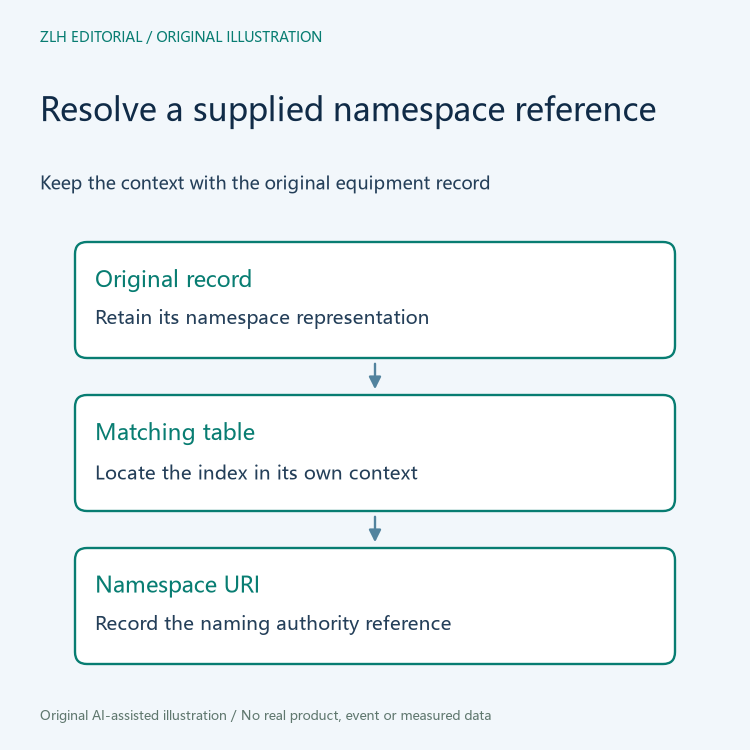
Determine how the namespace is represented
The OPC Foundation Part 3 NamespaceIndex definition explains that the numeric namespace value corresponds to an index in NamespaceArray. It describes the namespace URI as identifying the naming authority responsible for the identifier. These are separate parts of the interpretation: a compact reference and the namespace it resolves to.
Write down whether the supplied representation uses a numeric namespace reference or includes a namespace URI. If it uses an index, locate that entry only in the matching table. Preserve the original form alongside any resolved URI so another reader can see how the interpretation was obtained.
Do not presume that the same namespace number means the same authority in every supplied context. Conversely, a URI used as a namespace should not automatically be relabeled as a network endpoint to visit. The question at this stage is which naming context the record declares, not which machine a reviewer could contact.
Keep the identifier type with the identifier value
The OPC Foundation Part 6 string-encoding section describes namespace-index and namespace-URI forms and distinguishes numeric, string, GUID and opaque identifier forms. This lets the reader recognize why an identifier's type marker belongs in the record rather than being discarded as decoration.
Copy the supplied type and value without silently converting the value into a different representation. A numeric-looking string should not be retyped solely because a spreadsheet prefers numbers. If a reporting tool has already stripped the type marker, identify the missing information instead of guessing from the characters that remain.
The encoding section also defines how URI portions are escaped. During a document review, retain the exact original text before asking a source owner to explain an unfamiliar encoded value. Casual punctuation cleanup can remove information from the representation. This article does not provide a conversion utility or claim that any particular customer identifier has been decoded.
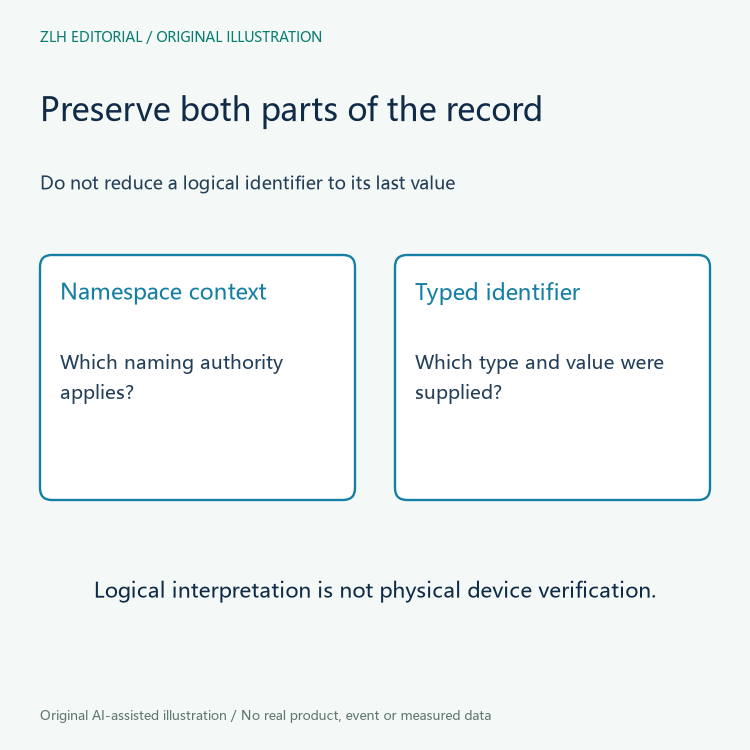
Compare records only after their contexts are known
When two equipment reports contain identifiers that appear similar, first compare the namespace context and identifier type. Keep the source of each comparison visible. An identical trailing value in two screenshots is not, by itself, a documented match between the complete logical identifiers.
Even a resolved logical record does not independently establish the physical identity, calibration state or ownership of a device. Those claims need their own relevant material. A catalogue reviewer should therefore describe the comparison actually made, rather than expanding a namespace interpretation into an unsupported statement about a machine on a production line.
Deliver the interpretation path and the remaining questions
A complete reading note names the original record, the namespace representation, the applicable table entry where needed, and the typed identifier. It should also identify any missing context that prevents a conclusion. Another reviewer can then follow the same documentary path instead of relying on an isolated namespace number.
The original diagrams contain no real server address, live device values or tested connection. Related material appears in the intelligent equipment information collection and the article directory. Preserving the reference and its context together makes an equipment record easier to review while leaving operational and physical claims within their proper evidence boundaries.


