

Equipment Configuration Acceptance: Name the Parameter Owner
2026-11-01
Equipment Configuration Acceptance: Name the Parameter Owner
An equipment configuration handover contains a tidy parameter list, but several components use similar labels. The buyer cannot determine which component owns the setting cited in the supplier's explanation. Equipment configuration acceptance should resolve that ownership before interpreting a value or constraint. This article follows a fictional ROS-based software delivery, with no actual device settings and no instructions to change a connected machine.
Locate the owning node before comparing labels
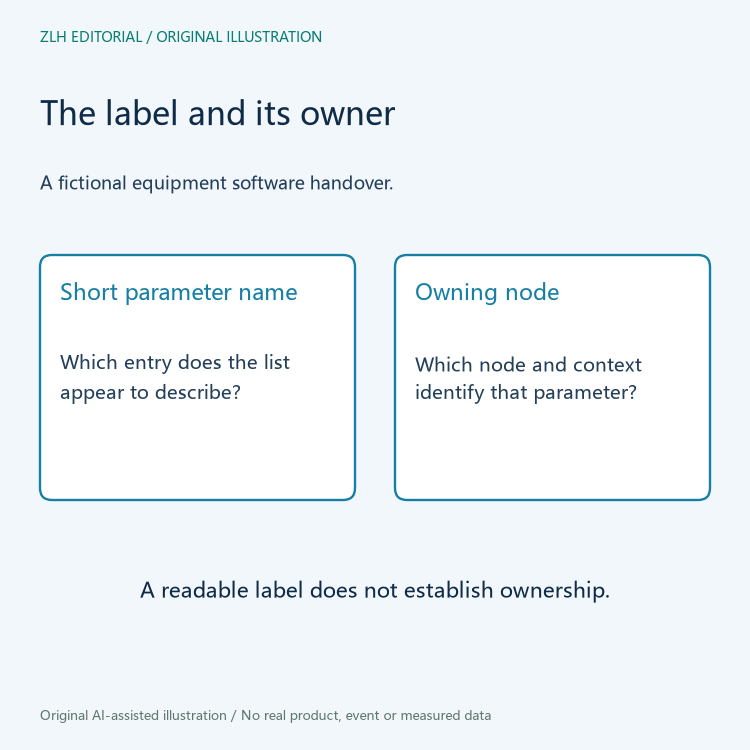
The ROS 2 Jazzy parameter documentation explains that parameters are associated with individual nodes and are addressed using node and parameter information. That association matters when reviewing a list. A short parameter name alone may not identify the particular item discussed in a multi-node delivery.
Ask the supplier to identify the owning node and the name context applicable to its submitted configuration. The explanation should refer to the delivered software arrangement, not a generic diagram from an unrelated release. If a component has been renamed, request the relationship between the supplied record and the explanation the buyer received.
Keep that name context visible when the record moves between teams. A shortened label in a purchasing summary can be useful for reading, provided it still leads the responsible engineer back to the identified parameter entry.
In the imaginary review, the buyer has a list exported from one demonstration and a narrative describing another component arrangement. Neither record should be silently amended to make the labels agree. Identify the association that is missing and ask for a response tied to the named delivery. This produces a specific question instead of an unsupported accusation that the configuration is incorrect.
Distinguish an initial value from a later observation
Request the intended role of each supplied value. A startup configuration may describe what is requested when a node begins, while an observation may describe a particular initialized instance. The supplier should explain which evidence the handover contains. The reviewer must not promote an unexamined configuration file into proof of the running application's state.
The node's identity and the observation boundary should stay together in the acceptance record. Ask which software delivery, component arrangement and authorized demonstration the explanation concerns. Where that information is absent, report the missing association rather than filling it from a familiar example. This article contains no observed parameter value or claim about an actual application instance.
Read the descriptor as part of the declared contract
The Jazzy ParameterDescriptor message definition describes its read_only flag as preventing a value from changing after initialization when true. This is a defined software-interface concept. A buyer should request the descriptor applicable to the supplied parameter instead of inferring mutability from the appearance of a configuration editor.
A field that can be typed into may belong to a preparation screen rather than to a running node. Equally, a locked-looking display may reflect the interface presentation without explaining the node's declared descriptor. Ask the supplier to connect the interface behavior to the particular ownership and lifecycle boundary being reviewed.
Do not convert a read-only parameter declaration into a broader security or equipment-safety assurance. It answers a limited question within the supplied software contract. The responsible technical team must assess other controls and operational requirements separately. No attempt to change a value is proposed here as a way to test a physical system.
Turn a confusing label into an answerable request
A useful request can identify the disputed list entry, the node association needed and the descriptor information that would clarify its intended behavior. The supplier may answer with a corrected record, a version-specific explanation or an authorized software demonstration. Those responses should be evaluated against the same question rather than against an expanding set of unstated expectations.
If only part of the association is clarified, preserve the remaining question. Knowing which node owns an entry does not automatically establish when its recorded value applied. Likewise, receiving a descriptor does not explain which of several similarly named entries the supplier meant. Separate these intermediate findings so the review remains usable to the next reader.
Close the configuration finding at the supplied scope
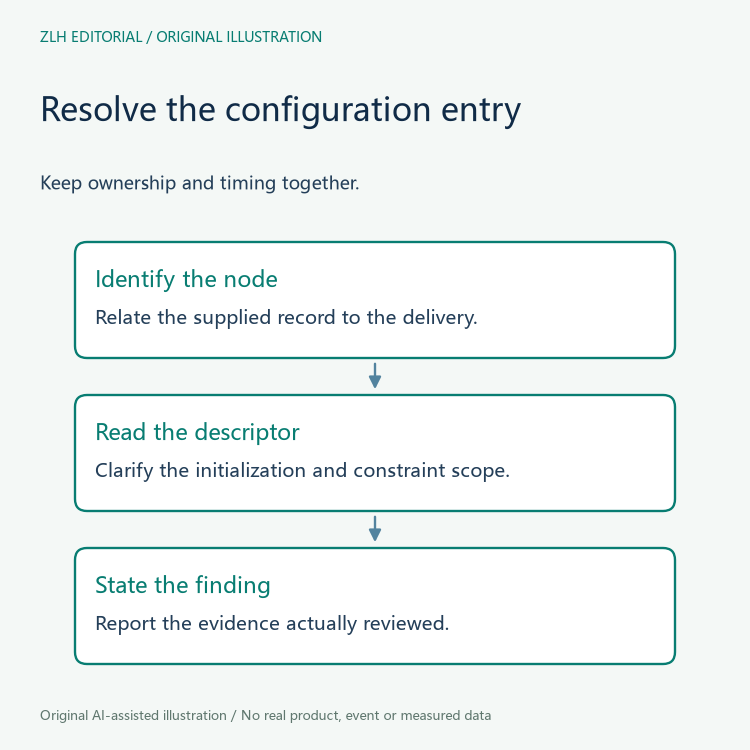
The final note should identify the node, parameter, relevant initialization boundary and evidence actually reviewed. It can confirm that a handover entry is understandable while leaving operating suitability outside the conclusion. A documentation acceptance is not a calibration finding, an authorization to commission equipment or evidence that every application parameter has been inspected.
The original figures illustrate ownership and review questions without device values or real network addresses. Related records appear in our equipment specification collection, and the article directory offers additional reading. A clear configuration handover makes the identity and limits of each accepted explanation recoverable.


